This article was originally posted on the LSE Impact blog on 30 January 2026, and can still be found there. We have republished it because this is an important issue. It has been written by Helen Kara, who has thought deeply about this issue for some time. We have republished it here under the under the Creative Commons Attribution 4.0 International (CC BY 4.0) licence.
Many English-speaking countries, Australia, New Zealand, Canada, the US, use “land acknowledgements” to recognise that the land someone lives or works on is also others’ territory. An acknowledgement may be spoken, perhaps at the beginning of a meeting or event, or written on a document or sign.
Land acknowledgements were first promoted by Indigenous Australian political movements in the late 20th century. They were based on the Welcome to Country, an Aboriginal welcoming ritual that has been used by Indigenous peoples in Australia for millennia. By the early 21st century land acknowledgements were common in Australia and New Zealand. They were adopted more widely in Canada after the release of the Truth and Reconciliation Commission’s final report in 2015, and in the US after Oscar-winning New Zealand filmmaker Taika Waititi acknowledged at the 92nd Academy Awards in 2020 that the ceremony was taking place on Indigenous land.
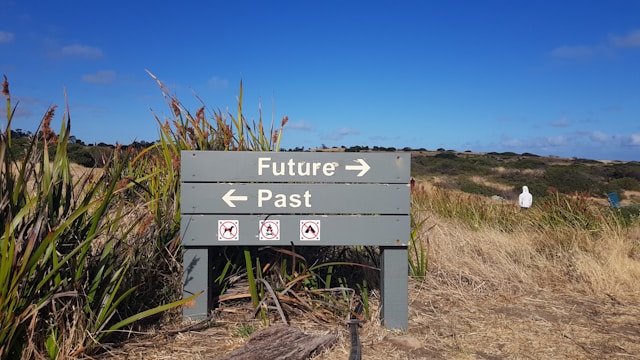
The underlying rationale, as anthropologist Chip Colwell says, looks in two directions: to gain or maintain awareness of a troubled past, and to lay the groundwork for building an equitable future.
Not everyone is in favour. Land acknowledgements can be seen as virtue signalling, irrelevant and nonsensical, or lip service, among other perspectives. One dimension which seems key to countering these kinds of perspectives is that land acknowledgements should not be tokenistic, learned by rote and delivered with as much feeling as a station announcement that the train on platform two is running five minutes late. It seems crucial for effective land acknowledgements to be heartfelt, creative, perhaps even humorous.
At the start of an online workshop I was delivering for a Canadian university in December 2025, I was interested to hear the host offer a ‘land and labor acknowledgement’. This is a development intended to acknowledge not only the holders of the territory, but also the paid and unpaid labour that has contributed to the country as it is today.
The decolonising work we need to do in the UK looks different, because we were the colonisers “over there” and therefore removed from many of its legacies. However, the major social justice grant funder Lankelly Chase announced in 2023 that it would give away its assets, valued at around £130m, recognising itself as part of the problem of colonial capitalism. Organisations are springing up to challenge wealth inequality which is in part a legacy of colonisation. The Church of England is currently struggling with the potential for making reparations for its historical links with the slave trade. Across the UK many institutions are currently grappling with these issues, notably higher education.
Following US examples, UK higher education institutions have for the past decade been researching ways in which they grew and benefited from colonial wealth. The University of Glasgow was first to publish its findings, in 2016, in a comprehensive report into its historical links with the slave trade. Similar work has been done at other universities including (but not limited to) Bristol, Cambridge, Liverpool, Manchester, Nottingham, Oxford, and Warwick. In 2025 the University of Edinburgh published its own Race Review findings, and no doubt more will follow suit.
This speaks to Gurminder Bhambra’s concept of epistemological justice, i.e. making visible the ways in which colonisation was integral to colonising countries’ development, which is as important as material reparations. And accessible to more people, because we are not all able to provide material reparations, but – if we choose to do so – we can all exercise epistemological justice.
So how could we do this, in practice? British people are the inheritors of one of the largest colonial enterprises. If we were to use some kind of acknowledgement of our own troubled past, which might help us towards a more equitable future, it could perhaps most helpfully focus on wealth and labour.
After a period of reading and thinking, I drafted this:
We pause to acknowledge the wealth this country gained in the past through colonial processes including slavery and appropriation, and the wealth this country gains from others in the present through associated processes such as capitalism and environmental degradation. We recognise that the wealth of this country benefits many people on this island today. We remember that our current infrastructure and institutions are built on the labour of countless people, including enslaved, indentured, trafficked, forced, and undocumented people. We are thankful for all care-giving labour past and present, while recognising that most of this was and is unpaid or poorly paid. We accept our collective responsibility to repair harms, redress inequalities, and protect this land and its peoples.
I offer this as a ‘starter for 10’ rather than as a prescription. No doubt some people will pooh-pooh the whole idea; that is their prerogative. Those who think we have a role to play in decolonisation may like the idea but want to change the wording, and that’s their prerogative too. One thing we can learn from the history of land and other acknowledgements in settler-colonised countries is that they are dynamic, relational statements, not fixed scripts.
We can also learn from this recent history that these kinds of acknowledgements can help us to come to terms with a shameful past, understand our current situation more clearly, and lay the groundwork for potentially useful conversations which could take us into a better future. On that basis, is it an unreasonable idea to start using a wealth and labour acknowledgement here in the UK?

Helen Kara FAcSS has been an independent researcher since 1999 and an independent scholar since 2011. She is a visiting fellow at Swansea University in Wales and at ANU in Australia.
She is the author of Creative Research Methods: A Practical Guide (Policy Press, 2nd edn 2020) and Research Ethics In The Real World: Euro-Western and Indigenous Perspectives (Policy Press, 2018). Helen tweets from @DrHelenKara. Her ORCID is: 0000-0001-7348-0963.
 The Research Whisperer
As someone with dual UK/NZ citizenship (and having lived roughly half my life so far in each), this is an encouraging read. I know this is a little tangential, but in the UK context, I would also add the impact of child labour.
LikeLiked by 1 person