I’ve been thinking about Australian’s recent Open Access (OA) deal now that the dust has settled on the recent showdown with Elsevier. After all, we’d been spending some $500 million to $1 billion per year on journal subscriptions (an eye‑watering 5–10% of our national research spend), so it feels sensible to negotiate as a national bloc. But the more you look at how the new agreements actually work, the more it feels like a massive missed opportunity.
Collective bargaining makes sense as one of the few levers we have against concentrated supplier power. And it’s probably safe to assume that the new deals reduce costs (thought the numbers are all secret). It’s somewhat similar to national level bargaining over pharmaceutical prices: journal articles and drugs are both goods with no real substitutes so suppliers get to form effective mini-monopolies over them. But this approach is very much a safe option that leaves the structures that caused the whole problem in place.
The problem with what we bought
The new deals are called transformative agreements, since they’re supposed to incentivise publishers to transform their practices from paywalls to Open Access. For our part, we get access to journals, and Australian research gets published openly so that anyone can read it. However, there are some deep problems with building Australia’s Open Access strategy entirely around the business models of the very corporations that created the access crisis. I’d like to build on some of the range of drawbacks that others have highlighted:
- It entrenches the oligopoly.
- It sidelines Open Access pioneers.
- It leaves domestic journals exposed.
- It drains momentum from real reform.
Transformative agreements bundle reading and publishing fees into a single payment in a structure tailored to the incumbent publishers. Open Access‑first publishers like Public Library of Science (PLOS), Open Library of Humanities (OLH), BioMed Central (BMC), PeerJ, and eLife don’t run paywalls and so can’t offer that same package. Frustratingly, this results in the oligopoly getting strengthened while the pioneers who built Open Access are pushed further to the margins.
This dynamic also makes small titles more vulnerable to being absorbed by the same megacorps the deal empowers. The larger the publisher, the easier it is to participate in the national agreements and the harder it becomes for other journals to survive outside them.
Diamond Open Access journals run by universities and societies are even more vulnerable to shutting down. These charge neither authors nor readers by operating with the support and funding of the host organisations. Australia has at least 75 such journals listed in DOAJ, many hyper‑local and culturally specific. Instead of seeing growth in this area, I’ve watched journals in law, environmental science, and education quietly fold. Not because of lack of quality or readership, but because of burnout from the lack of shared infrastructure, stable hosting, and economies of scale.
The new deal definitely reduces publishing friction for researchers, but patching over the deeper structural problems risks draining the momentum needed for the reforms that would actually address the core issues. The whole arrangement starts to feel uncomfortably like paying protection money to the incumbents while neglecting the parts of the ecosystem that could genuinely turn the situation around.
Why does this keep happening?
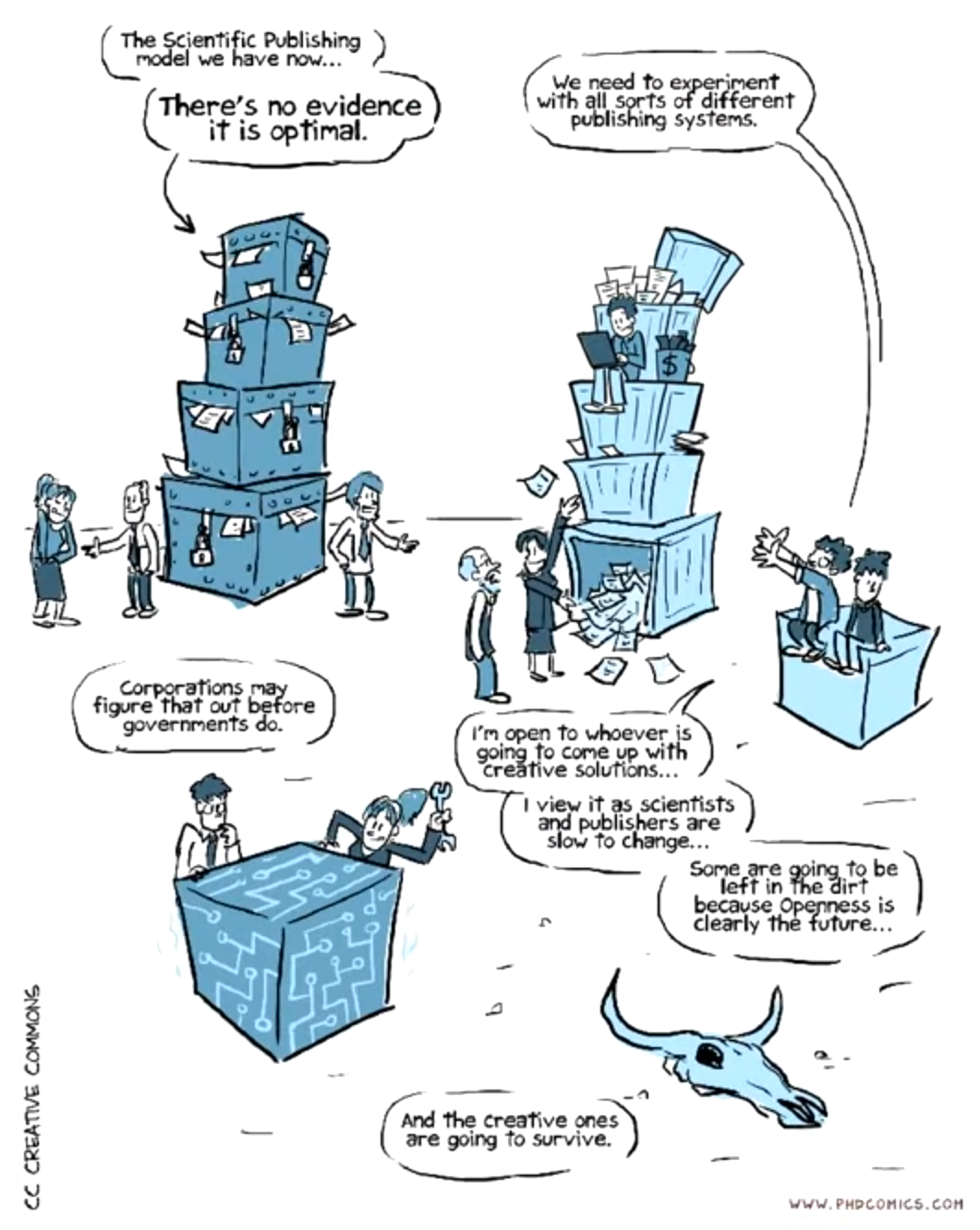
Part of the challenge is that every stakeholder is pulling in a slightly different direction: Researchers want access and prestige, and are constrained by systems that often disincentivise best practice; Librarians want long‑term sustainability and equitable public‑good infrastructure; Funders want value for money and public access to trustworthy research; Universities want to minimise costs while maximising rankings and avoiding researcher backlash.
Megapublishers, meanwhile, want exactly what they already have: increasing market consolidation and multi‑year contracts that keep everyone dependent. Given that landscape, perhaps it’s no surprise that Australia chose the most conservative path in the short term. However, there are approaches that better satisfy those stakeholder needs in the long term.
What a bolder strategy could build
It’s not naive to think there are better options. Some were indeed presented to (and sadly sidelined by [4.7 Mb PDF]) the Chief Scientist’s team. For the money we’re spending to stabilise the existing system, we could have built the infrastructure that would actually fix it in a way that’s both cost-efficient and better aligned to a national strategy.
Most of the cost of sharing research is in the labour already provided by the community: authors, peer reviewers and most editors do this work for free as part of giving back to the scholarly community. It’s just that, by accident of history, in Europe and North America this effort has largely been captured to tap profit out of the system. Conversely, South and Central America provide an alternate timeline of how this can go. They use national research agency support to run robust, sovereign publishing ecosystems using low‑cost, open‑source platforms like Scientific Electronic Library Online (SciELO) and RedALyC. These are not vastly wealthier countries than Australia and other middle powers struggling with the same problems. Networks of diamond open access journals like Free Journal Network and Open Journals Collective and Europe’s DIAMAS show how much pent up energy there already is for change.
Whilst building up national (or international) scale collaborative infrastructure, a properly coordinated repository system can cover the gap and provide a wealth of additional benefits. Currently, university repositories are used as a safety net to host Open Access versions of published papers (Green Open Access). But this is also fragmented, and leads to a lot of duplicated effort. A paper published by authors at five different unis may get five versions uploaded to five different repos or it may get zero. For arcane copyright reasons, most publishers only allow you to upload the text and images before it was formatted by the journal, so you have to also remember to track that version down. It’s probably why compliance remains so abysmally low for Open Access mandates from the Australian Research Council and National Health and Medical Research Council. A proper unified or federated repository system alongside mandated use could cut out the difficulties and support publications, data, non-technical summaries, textbooks, and more to tie Open Access into a broader open research strategy.
At the investment scales we’re talking about, these things are not especially expensive, but do take significant coordination and political will.
The road ahead
Australia is a middle power with a deep awareness of its vulnerabilities. It’s understandable that treating research sharing as a procurement problem feels more manageable than tackling the harder work of infrastructure and capacity‑building. But that instinct for caution shouldn’t push us into entrenching the very problems we’re trying to solve.
If Australia is serious about building a system that genuinely strengthens research culture, we need to start seeing it as core part of nation‑building. The question then becomes whether we’re willing to invest in the infrastructure and communities that actually create and disseminate public value.

Thomas Shafee works across research strategy, open knowledge, analytics, and data. He’s particularly interested in the quiet mechanics that shape how knowledge moves through society and determine research transparency, robustness and impact. He was previously Editor in Chief of the Diamond Open Access journal, WikiJSci. His ORCID is 0000-0002-2298-7593.


[…] and national publisher deals have been struck. But this is set against questions about ‘who gets left behind‘ when access is treated as a procurement problem and lacks national infrastructure and […]
LikeLike