Inger Mewburn, Pat Thomson, Helen Kara and Aimee Grant recently published a book, Managing Your Research Project. The Research Whisperers think that it is a handy contribution so we asked the authors if we can publish excerpts from the Introduction.
This post is drawn from pages 1-5 of Managing Your Research Project, 1st edition, by Inger Mewburn, Pat Thomson, Helen Kara, and Aimee Grant. Copyright 2026 by Routledge. Reproduced with permission from the Taylor & Francis Group.

Introduction
For us, a research project is any activity that involves at least one research task. It could be something small, like a literature review, some interviews or a quick online survey. Or it might be a bigger project like developing a new artifact, program, intervention or product. Research happens in every academic discipline: science, humanities, engineering, medicine, the creative arts and many others. The research activity could take place within a university or outside academia. The research might be funded, or not.
This book is designed to help anyone get started on managing a research project, though it is mainly aimed at academics. Sadly, training in managing research projects is in short supply in academia. Maybe this is why many researchers find the task time-consuming and sometimes confusing and frustrating. If you’re doing research, either by yourself, with another collaborator, or leading a team, you’ll almost certainly be encountering some challenges managing time, people, publication strategies, money and/or data. You might already have some training to help you deal with these challenges. Or you might be just feeling your way, learning ‘on the job’.
Either way, we’re here to help.
Is this book for me?
If you’re one of the researchers who finds managing research projects frustrating – yes, absolutely! We wrote this book for you. We hope this book will also be useful for a wide range of other people, even those who already find project management a joyful experience (and yes, they do exist). This book is relevant for those just starting out, as well as for experienced researchers juggling many projects. We also wrote for researcher developers who do workshops on research project management and administration staff who provide advice to researchers. Everyone involved in doing research needs a little help at times.
But first: a note on what we will and won’t do in this book. We are not going to teach you about ‘project management’ as a generic skill that can be turned to any purpose. Project Management is a whole discipline, with an extensive literature, which exists to help people work on a range of projects, from building houses to implementing enterprise software systems. There are academic and other courses to help you learn general Project Management principles and skills. Our concern in this book is very specific: we want to help you manage research projects, specifically the challenges around managing time, people, publication strategies, money or data.
Managing a research project has its own peculiarities and its own context and framing, which makes it different from managing other projects (Twohig et al., 2023). For starters, some research projects don’t have clear start and end points. Sometimes you are more concerned with the ongoing job of making new knowledge about a topic or problem and sharing that knowledge with interested others (many humanities scholars, such as historians, will fall into this category). Some projects are interdisciplinary, have multiple partners or have extended timeframes, beyond the careers of individual researchers (such as longitudinal public health research). For many researchers, large and small projects can intertwine and overlap. Sometimes, even defining what is, and isn’t, a project can be difficult.
In this book, we draw advisedly and selectively on some of the literatures and tools from the discipline of Project Management, but you won’t find material organised in the same way as you would in a conventional Project Management textbook. We also sometimes use different terms from Project Management scholars, preferring terms that will be more familiar to researchers, to aid your understanding of the concepts. We have grouped information together in ways that fit with the demands of managing research within (or with) universities as a particular kind of organisation. To that end, we pay particular attention to questions of power, ethics, academic purposes and practices.
While writing this book, we noticed a lack of reflexive literature about project management: work that acknowledges the author’s own position and context. In that spirit, we share that we all live in high-income countries (Australia and the UK) and are four white women. Our ages vary, and one of us works outside academia. These differences enriched our collaboration, though we recognise we have more in common than not. Our advice reflects our own experiences and may not fully resonate with those in different contexts, institutions or systems. Although encouraged to incorporate ‘other’ research approaches, we chose not to speak for experiences that aren’t ours. Instead, we offer what has worked for us and invite you to adapt our suggestions to suit your needs. We also hope others will add their unique voices – lived experience is valuable and worth sharing.
This book is mostly focused on the potential challenges of research project management and how to overcome them. Project management can be very challenging, but we should also note that research management can also be satisfying, collegial, thrilling and fun. Learning new things, watching team members develop, and celebrating milestones are just a few of the enjoyable aspects of project management.
Managing a research project is not, and cannot be, a neutral, apolitical activity. What we choose to do, and particularly how we manage others, involves choices about how to act in the world. We purposely chose to adopt principles grounded in feminist thought throughout our writing. Joan Tronto has been advocating for a more human-focused approach to care work since the 1980s, using the term ‘ethics of care’ (Tronto, 1998). She later moved this into consideration of other institutions, including those without a primary purpose to deliver care, such as health services and schools (Tronto, 2010). Power and purpose are central to her thesis. For Tronto, care practices include the following:
- Being aware of need
- Responding to the need
- Having the skills required to meet the need
- Evaluating how others view the person, including any violations of care
For us, ethical research project management means being non-exploitative to staff, ensuring their safety and well-being. In a neo-liberalist context, with many researchers on fixed-term contracts linked to project funding, working with an ethic of care can be challenging for project managers. Academics often find themselves having to operationalise the exploitative and uncertain labour arrangements that universities have adopted in recent decades. In short, we don’t claim to be a comprehensive resource on project ethics, rather to offer you some tools that can help you to manage your projects in more effective and ethical ways.
Finally, we have tried to be intentional in our language use, making the best choices from an equality perspective throughout. For example, we have chosen to use ‘interested people’ or similar language instead of ‘stakeholders’, responding to critique of this term’s colonialist histories (Akl et al., 2024). We still may make mistakes in how we use language and address problems: if you have views, email us! We are easy to find and open to feedback.
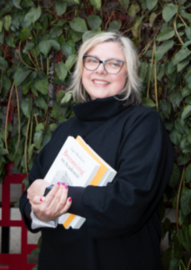
Inger Mewburn is the Director of Researcher Development at The Australian National University where she oversees professional development workshops and programs for all ANU researchers. Aside from creating new posts on the Thesis Whisperer blog, she writes scholarly papers and books about research education, with a special interest in post PhD employability, research communications and neurodivergence.
With her colleague, Jason Downs, she runs On the Reg, a training company dedicated to helping researchers be efficient and happy at work. As part of that work, the produce the On the Reg podcast. Her ORCID is 0000-0003-0683-5255.

Pat Thomson is Emeritus Professor of Education at the University of Nottingham and a part-time researcher at the University of Adelaide. Her work centres on the ways in which educational practices can be made more equitable; her research currently focuses on arts and cultural education in schools, communities, galleries and museums. She is a former school leader of alternative and disadvantaged schools.
Her academic writing and research education blog, patter, is archived by the British Library and posts are frequently republished elsewhere. Her ORCID is 0000-0002-4801-0000.
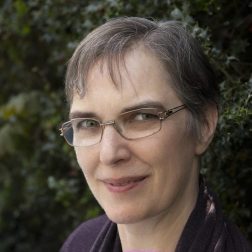
Helen Kara FAcSS has been an independent researcher since 1999 and an independent scholar since 2011. She is a visiting fellow at Swansea University in Wales and at ANU in Australia.
She is the author of Creative Research Methods: A Practical Guide (Policy Press, 2nd edn 2020) and Research Ethics In The Real World: Euro-Western and Indigenous Perspectives (Policy Press, 2018). Her ORCID is: 0000-0001-7348-0963.

Aimee Grant is Associate Professor in public health and Wellcome Trust Career Development Fellow at Swansea University. Her fellowship project, Autism: from menstruation to menopause, uses participatory research with the Autistic community to better understand reproductive health. She aims to improve the health of (i) people in the perinatal period, particularly in relation to infant feeding, and (ii) Autistic people.

