Inger Mewburn, Pat Thomson, Helen Kara and Aimee Grant recently published a book, Managing Your Research Project. The Research Whisperers think that it is a handy contribution so we asked the authors if we could publish this excerpt from Chapter 2: Approaches to project management.
This post is drawn from pages 19-24 of Managing Your Research Project, 1st edition, by Inger Mewburn, Pat Thomson, Helen Kara and Aimee Grant. Copyright 2026 by Routledge. Reproduced with permission from the Taylor & Francis Group.

Research projects come in many forms – applied, developmental, evaluative or data-driven inquiries – but regardless of type, they often operate in what might be called discovery mode. This mode is defined by open-ended exploration and inherently fuzzy deliverables. In discovery-oriented work, uncertainty isn’t an obstacle to be eliminated but a condition to be navigated. Research projects tend to unfold iteratively, even when they start with a clear plan. Researchers often find themselves generating new questions alongside the answers they seek. Managing discovery research therefore requires a shift in stance. Researchers must act not just as project managers, but as advocates for their project – continually interpreting and re-interpreting the project’s evolving shape for collaborators, funders and others. This kind of work demands communicative agility as well as intellectual resilience: the ability to explain, and re-explain (verbally and in writing), why the project looks different now from when it began and why it continues to have importance and value in its updated form.
We hope what we have said so far makes one thing clear: there is no single project management theory, framework or approach that will work for all research projects. Therefore, ‘importing’ project management theories and approaches from the literature and applying them to any given research project, without critical awareness, is deeply problematic. Even if we could eliminate research project uncertainty in theory – say, with infinite time, data and control – in practice, we cannot. Time and resources are always limited, and projects unfold through the actions of people who make mistakes, revise decisions and bring diverse and sometimes conflicting interests. Budgets are finite, schedules slip and staffing can be inconsistent, especially with the ‘neo-liberal’ logics of university management. These constraints mean that uncertainty is not just an occasional disruption but a routine feature of the research environment. As Böhle and colleagues (2016) argue, this inevitability can be understood in both ontological and practical terms: uncertainty is embedded in the very structure of research project work, and it persists because of persistent gaps between ideal conditions and real-world constraints. Whether we view this contradiction as a structural feature or a practical limitation, the implication is the same: research project management must start from the premise that uncertainty is not an exception, but the norm.
In our view, all this uncertainty around how research should and could be managed means researchers should feel free to explore and adapt existing project management theories, approaches and tools to suit their needs and circumstances. However, the biggest difficulty researchers face in taking this kind of ‘free-wheeling’ approach is that most systems of research management and reporting are built around the assumption that conventional Project Management theories and approaches are applicable to research.
Take, for example, the simplest ‘staged’ approach to managing projects which imagines a five-stage process, as outlined in the Project Management Body of Knowledge (PMBOK) (2025). While this framework is problematic and has long been considered outdated by the Project Management discipline, the five steps are still the foundational assumption of many university management systems:
Project Initiation: where problems are defined, the project is scoped, a needs analysis might be done, resources are explored and deliverables (things you are going to make or write) are decided.
Planning: the actions needed to ensure your deliverables get done, preferably on time and on budget, are articulated and (usually) put on a timeline, often expressed as a Gantt chart.
Execution: where actions are done to get the deliverables out on time. This is what most people think of as the ‘work’ (which tends to make all the other work in the earlier stages ‘invisible’ (Star & Strauss, 1999).
Monitoring: happens throughout the project, in formal and informal ways. Formal monitoring often includes milestone reports to a funding body. Informal monitoring might just be check-ins with team members in meetings or via email.
Closure: where a deliverable is declared done. Again, closure can be formal (such as a summary report) or informal, such as distributing a link to a publication to a mailing list or to your manager.
Much of the grant administration infrastructure in universities, and the processes for managing PhD milestones for that matter, are built around these five stages. Thus, forms, templates and processes are often built on the assumption that research projects follow a predictable, linear sequence of stages. While this framework can be helpful for organising funding and accountability structures, it sits uneasily with the realities of research work. We question whether problems can always be clearly defined at the outset, deliverables firmly established and progress reliably tracked against predetermined milestones. As Böhle et al. (2016) argue, uncertainty is not a deviation from project norms but an intrinsic feature of complex, knowledge-intensive projects. Researchers often encounter shifting problems, emergent insights and evolving methods – conditions that challenge the very premise of fixed scopes and timelines.
The administrative insistence on linearity may therefore rub up against reality in uncomfortable ways. Sometimes projects adhere closely to the five-stage model, at other times they deviate spectacularly. For example, planning often starts before initiation and continues after it; monitoring runs alongside execution; closure happens all the way through as some deliverables are finished while others continue. Projects may also roll into each other, with the execution of some parts of an existing project triggering new projects, which can then leverage previous planning and monitoring work.
Inger’s PostAc project exemplifies the unpredictable, evolving nature of research. Even the name PostAc was assigned a couple of years in and is really an ‘umbrella term’ for six related research projects and two commercial ventures. All these efforts were united by a mission to help PhD students find employment. What began as an idea for a paper over corn chips and salsa with her friend Dr Rachael Pitt, morphed over a decade into a sprawling, interdisciplinary collaboration. Initially focused on academic job ads, the project expanded to all job ads, drawing in new collaborators, attracting funding, employing PhD students and ultimately spinning off into two commercial products. Inger wasn’t so much a project leader as a ‘crucial node’ in a shifting research network – her stable employment allowed her to keep ideas alive across changing teams and multiple side-quests, chaotic administration and fluctuating funding. The project formally closed in 2024, but its research legacy lives on in ongoing collaborations, papers and shared mission-driven momentum.
Not all projects are this messy! We can usefully contrast Inger’s experience with Aimee’s work in medicine. Aimee’s projects follow much tighter trajectories, very closely aligned to the Gantt charts prepared during the planning stage of projects (see later in this chapter for an explanation of Gantt charts). This approach to research is strongly linked to the funding context within UK health research, where funders such as the National Institute for Health Research require regular monitoring throughout the project and a very detailed final report. Some of the studies Aimee has been part of have also had ‘stop go criteria’. This means that at certain points in these projects, performance against milestones is strictly assessed, and projects may have their funding removed early if the research doesn’t appear to be feasible to deliver. (That said, Aimee says health researchers still often come up for ideas for research whilst hanging out with colleagues!)

Inger Mewburn is the Director of Researcher Development at The Australian National University where she oversees professional development workshops and programs for all ANU researchers. Aside from creating new posts on the Thesis Whisperer blog, she writes scholarly papers and books about research education, with a special interest in post PhD employability, research communications and neurodivergence.
With her colleague, Jason Downs, she runs On the Reg, a training company dedicated to helping researchers be efficient and happy at work. As part of that work, the produce the On the Reg podcast. Her ORCID is 0000-0003-0683-5255.

Pat Thomson is Emeritus Professor of Education at the University of Nottingham and a part-time researcher at the University of Adelaide. Her work centres on the ways in which educational practices can be made more equitable; her research currently focuses on arts and cultural education in schools, communities, galleries and museums. She is a former school leader of alternative and disadvantaged schools.
Her academic writing and research education blog, patter, is archived by the British Library and posts are frequently republished elsewhere. Her ORCID is 0000-0002-4801-0000.
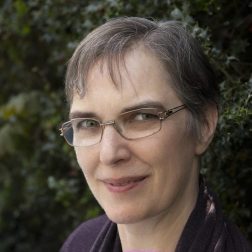
Helen Kara FAcSS has been an independent researcher since 1999 and an independent scholar since 2011. She is a visiting fellow at Swansea University in Wales and at ANU in Australia.
She is the author of Creative Research Methods: A Practical Guide (Policy Press, 2nd edn 2020) and Research Ethics In The Real World: Euro-Western and Indigenous Perspectives (Policy Press, 2018). Her ORCID is: 0000-0001-7348-0963.

Aimee Grant is Associate Professor in public health and Wellcome Trust Career Development Fellow at Swansea University. Her fellowship project, Autism: from menstruation to menopause, uses participatory research with the Autistic community to better understand reproductive health. She aims to improve the health of (i) people in the perinatal period, particularly in relation to infant feeding, and (ii) Autistic people.

